
Most of us waste more time on our phones than we’d like to admit. But what if scrolling could actually make you smarter? That’s where free educational brain games come in.
They challenge your memory, sharpen focus, and give your brain the kind of “good workout” that doesn’t involve a treadmill.
In this article, I’ll show you how these digital exercises can build mental strength, and we’ll explore the best free games available today.
Whether you’re a student, professional, or simply someone who wants a sharper mind, these tools can help you think faster, remember more, and stay mentally active.
How Can Free Educational Brain Games Build Mental Strength
Your brain is a living, changing organ that can grow at any age. Neuroscientists call this neuroplasticity, the ability to form new neural pathways through practice and repetition.
Just like muscles respond to resistance training, the mind responds to cognitive challenges. Free educational brain games leverage this process by targeting specific cognitive functions through structured play.
Here’s how they help strengthen mental performance:
- Improve focus and attention: Games that require quick reactions or pattern recognition enhance sustained attention and reduce distractions.
- Enhance working memory: Puzzles and sequence-based challenges train short-term recall, the foundation of complex thinking.
- Boost problem-solving: Strategic games encourage flexible thinking and logic-based reasoning.
- Encourage emotional regulation: Games that reward persistence or calm thinking help manage stress and frustration tolerance.
- Support long-term brain health: Regular cognitive training can delay age-related cognitive decline.
In essence, brain games help your neurons “communicate better.” Consistent mental stimulation fosters stronger connections, enhancing your ability to adapt, learn, and remain mentally resilient.
What are the Top Free Educational Brain Games That Build Mental Strength?
Not every online app is worth your time. The best ones strike the right balance between education, engagement, and measurable results. Free educational brain games should feel enjoyable yet mentally demanding. You should walk away from each session feeling challenged, not drained.
Here are some options we recommend that stand out for their educational value and mental impact:
- Mindpal
- ABCya! Games
- PBS KIDS Games
- Prodigy Math
- NeuroNation
- Wordle!
- SuperBetter
- MindHippo
Mindpal
Mindpal offers over 40 mini-games targeting seven core skills: memory, attention, math, language, speed, flexibility, and problem-solving. Each game adapts to your performance, ensuring a balanced challenge that’s neither too easy nor overwhelming.
You can track your progress through “brain scores,” build streaks, and monitor skill improvements over time.
The layout is clean, progress tracking is simple, and daily reminders help you stay consistent. It’s direct, data-driven, and genuinely useful for anyone looking to improve their mental performance.

Key Features
- Builds personalized daily activities based on your performance and focus goals.
- Uses adaptive AI to make games progressively challenging as you improve.
- Provides detailed progress tracking and visual analytics of brain scores.
- Includes vocabulary and math games to enhance language and logic.
- Helps users strengthen concentration through timed attention drills.
- Supports cross-device access for both iOS and Android users.
- Features short sessions that fit easily into daily routines.
- Allows friendly competition by comparing scores with other users worldwide.
- Backed by psychological research on neuroplasticity and cognitive improvement.
ABCya! Games
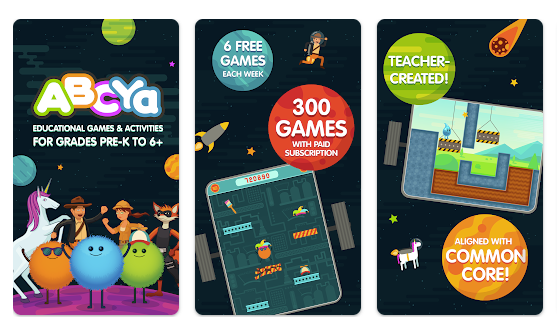
This app combines entertainment with real skill-building. Each game targets focus, attention, memory, and logic through interactive challenges built by teachers. It’s structured by grade and subject so that every child can work on math, reading, or problem-solving at the right difficulty level.
Unlike mindless games, ABCya rewards focus and patience. The kidSAFE Seal certification ensures a secure learning environment, so parents can relax while their kids play. Its colorful design, regular content updates, and ad-free gameplay keep learning enjoyable and consistent.
Key Features
- Offers more than 300 teacher-made games that strengthen attention, logic, and academic skills.
- Organizes activities by grade and subject for easy navigation and targeted learning.
- Encourages focus and concentration through goal-based games that require precision and timing.
- Features engaging visuals and sounds that maintain motivation without overstimulation.
- Includes math, reading, strategy, and typing challenges for comprehensive skill development.
- Provides a safe, ad-free environment certified by the kidSAFE Seal Program.
- Updates new games monthly to keep content fresh and relevant.
- Supports both classroom use and at-home independent learning.
- Available on Android, iOS, and browsers for easy access wherever you are.
- Backed by educators and widely used in schools for foundational brain training.
PBS KIDS Games
PBS KIDS Games is one of the best-designed learning platforms for young children. It turns screen time into meaningful learning through 250+ curriculum-based games featuring familiar PBS characters like Daniel Tiger, Wild Kratts, and Elinor Wonders Why.
Every activity improves focus, logic, and memory by keeping children actively engaged rather than passively entertained. The interface is simple enough for preschoolers to navigate without help, and the bilingual options in English and Spanish promote inclusivity.
Unlike most free educational brain games, PBS KIDS doesn’t use ads or collect data, which makes it genuinely child-safe. Games are organized by subject: math, reading, science, and art, making it easy for parents to guide skill development.

Key Features
- Includes more than 250 free games that build memory, focus, and problem-solving.
- Offers bilingual options in English and Spanish to promote cognitive flexibility.
- Uses familiar PBS characters to strengthen emotional and social learning.
- Encourages attention span through timed puzzles, mazes, and logic challenges.
- Adds new educational content weekly to keep engagement consistent.
- Features STEM-based games that teach early science, engineering, and math skills.
- Provides an entirely ad-free and data-safe environment for kids ages 2–8.
- Works offline once games are downloaded, ideal for travel or limited Wi-Fi.
- Includes parental resources for progress tracking and device storage management.
- Supported by PBS, ensuring educational credibility and quality.
Prodigy Math
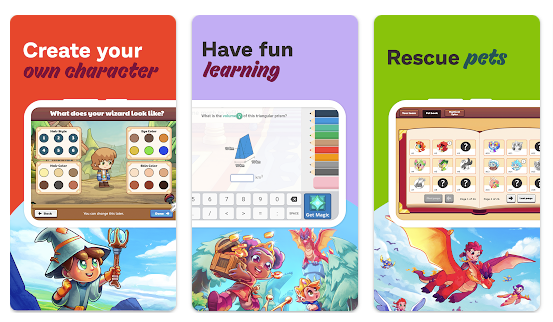
Prodigy Math turns maths practice into a fantasy adventure. Players solve maths problems to progress through levels and challenges. It aligns with school curricula, making it both engaging and academically relevant.
Studies on gamified learning show that integrating game elements into education significantly boosts student motivation.
It complies with state standards like Common Core and TEKS, making it useful both at home and in classrooms. Parents can also track progress through a free dashboard, and teachers can easily integrate it into lessons.
Key Features
- Supports more than 1,400 math skills, from basic arithmetic to advanced problem-solving.
- Combines gaming and math learning to sustain focus and engagement.
- Adapt the difficulty to each student’s skill level to reduce frustration.
- Aligns with state standards, ensuring classroom relevance and accuracy.
- Builds attention span through goal-based challenges and rewards for progress.
- Backed by educators and recognized by Common Sense Education and AASL.
Wordle!
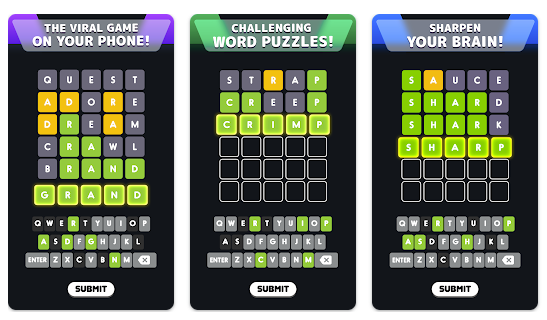
Sometimes simplicity wins. Wordle challenges players to guess a five-letter word in six tries. It builds verbal reasoning, pattern recognition, and deductive thinking. Word-based puzzles like this also strengthen linguistic fluency and long-term recall, particularly when played daily.
Players get six chances to guess a five-letter word, using logic and deduction to narrow down the possibilities. The color-coded feedback forces the brain to analyze patterns and recall letter placement, improving problem-solving speed.
The app adds variety with multiple modes, including Classic, Word Fever, and Secret Word, each targeting cognitive endurance in different ways. Unlimited play and timed challenges make it suitable for both casual users and those wanting daily brain stimulation.
Key Features
- Strengthens logic, memory, and verbal reasoning with short daily puzzles.
- Provides unlimited play in Classic mode for extended focus training.
- Uses color feedback to sharpen attention and pattern recognition.
- Features Word Fever mode to test reaction time under pressure.
- Includes Secret Word mode for deeper word association practice.
- Allows players to compete with friends through Together Mode.
- Offers optional hints and boosters to reinforce learning.
- Promotes concentration by rewarding accuracy over speed.
- Tracks daily streaks to encourage consistent brain engagement.
- Provides shareable results to compare scores with friends.
MindHippo
MindHippo is an online platform dedicated to brain training and mental fitness. It blends cognitive challenges with creativity-focused games, such as memory drills, reasoning puzzles, and mindfulness exercises.
It also integrates educational insights, making it suitable for adults who want to enhance productivity and lifelong learning.
Key Features
- It lets you play memory and logic games directly in a browser or on your device, with no downloads required.
- Provides free access to a variety of brain exercises targeting attention, memory, and mental flexibility.
- Works on any device, allowing you to train your brain wherever you are.
- Provides short sessions ideal for busy schedules.
- Tracks your scores and progress so you can monitor improvement over time.
- Uses a simple, clear interface to avoid distractions during mental training.
Criteria for Choosing the Best Free Games For Brain Training
With so many apps and websites claiming to improve cognitive ability, it’s essential to know what makes a brain game genuinely beneficial. When evaluating free educational brain games, the following four factors separate the good from the gimmicky.
Accessibility (Free, Easy to Use)
If a brain game feels like hard work to start, people won’t stick with it. Accessibility means being able to log in and play without complicated setups or hidden fees. It also ensures compatibility across multiple devices, allowing users to train anywhere.
Key points that define accessible brain games:
- No paywalls for core exercises: Free features should still deliver cognitive value.
- Simple design: Easy navigation encourages daily engagement.
- Offline functionality: Ideal for people who want to train on the go.
- Cross-platform compatibility: Available on iOS, Android, and browsers.
Educational or Cognitive Focus
Not all games that claim to be “brain training” actually train the brain. Some rely solely on entertainment value without meaningful cognitive challenge.
Actual free educational brain games should target one or more of the six core areas of cognition: memory, attention, processing speed, reasoning, visual-spatial skills, and linguistic ability.
These types of games help develop transferable mental skills, such as:
- Strategic thinking: Helps with planning and decision-making.
- Attention switching: Enhances multitasking ability.
- Short-term recall: Strengthens memory formation and retrieval.
- Numerical reasoning: Supports logical problem-solving.
Research-Backed or Expert-Endorsed
Science matters. The most effective cognitive games are grounded in psychological or neuroscientific frameworks. While it’s fine to enjoy a casual puzzle app, evidence-based platforms provide an extra layer of trust.
Here’s what to look for in research-backed games:
- Scientific validation: Studies published in peer-reviewed journals.
- Expert involvement: Collaboration with neuroscientists or psychologists.
- Transparent methodology: Clear explanation of how the exercises improve cognitive skills.
- User studies: Evidence of measurable improvements in large groups.
Engaging Interface Suitable for Adults and Teens
A game’s design affects motivation. If it feels dull or confusing, users quit. A well-designed brain game should feel rewarding and visually engaging without overwhelming players. Whether you’re 16 or 60, design can influence how much attention and enjoyment you give to the activity.
Qualities that define engaging interfaces:
- Visual clarity: Easy-to-read text, simple controls, balanced colour use.
- Instant feedback: Rewards progress to maintain motivation.
- Adaptive difficulty: Challenges that evolve with your skill level.
- Inclusive design: Suitable for multiple age groups and learning speeds.
Frequently Asked Questions (FAQs)
- Are brain games really effective for cognitive improvement?
Yes, when used consistently, brain games can enhance specific cognitive functions, including memory, attention, and processing speed.
However, their effects are task-specific, meaning improvement depends on the type of game and frequency of use. The key is regular, targeted practice, supported by lifestyle habits such as sleep and exercise.
- Which free educational brain game is best for children?
ABCya! and PBS KIDS Games are great options because they combine play with curriculum-based learning.
They’re safe, engaging, and designed for developmental stages. Prodigy Math also offers structured cognitive challenges that improve academic performance through play.
- Can playing brain games daily prevent cognitive decline?
Regular cognitive training may help maintain brain function and slow decline, especially in older adults. Studies suggest that consistent mental stimulation improves memory retention and problem-solving skills.
However, it should complement, not replace, physical exercise, social interaction, and balanced nutrition.
Final Thoughts
Building mental strength doesn’t require expensive software or complicated routines. Free educational brain games help you sharpen your mind in minutes a day. They’re fun, science-backed, and accessible to everyone, students, professionals, or lifelong learners.
For more insights on mental fitness, mindfulness, and learning strategies, explore other articles on MindHippo.