
Brain games are everywhere. They promise sharper focus, better memory, and quicker thinking, often while you are waiting for coffee or killing time before bed.
The real question isn’t whether they exist, but whether you should spend money on them.
This article breaks down free vs paid brain games without hype, sales talk, or exaggerated claims. You will learn what brain games actually train, where free options shine, when paid games make sense, and how to choose what fits your goals.
What Are Brain Games and How Do They Work?
In debates over free vs. paid brain games, the core mechanics are often similar. What changes is how deeply they adapt and track performance.
Most brain games target skills such as:
- Working memory
- Attention and focus
- Processing speed
- Logical reasoning
- Pattern recognition
They work by challenging the brain just beyond its comfort zone. Repetition strengthens neural pathways involved in the task, a principle known as neuroplasticity.
Research shows that people can improve performance on trained tasks, though broad real-world transfer is more limited than many apps claim.
Well-designed games prioritize clarity, feedback, and gradual difficulty increases over flashy rewards.
What are the Best Free Brain Games in Today’s Market?
Free brain games are popular because they remove risk. You can experiment, quit, or rotate games without spending anything. Below are standout options that deliver real cognitive engagement rather than idle tapping.
When people search for free brain games, these names appear for good reason.
- Wordle
- Journey Match
- Kitty Scramble
- Mind Hippo
Wordle
Wordle! is a fast, focused word puzzle app that trains logic, vocabulary, and pattern recognition without wasting your time. Each puzzle forces you to test hypotheses, eliminate wrong options, and refine guesses under clear constraints. That process directly exercises working memory and deductive reasoning.
Daily Puzzle mode encourages disciplined play, while unlimited modes support repetition, which matters for skill retention. Timed challenges add pressure, sharpening processing speed and attention control.
This is one of the few free brain games that maintain a high cognitive load while keeping the rules simple.

Key Features:
- It trains logical elimination and verbal working memory through constrained guessing.
- Daily puzzles promote habit formation without time pressure.
- Unlimited play modes enable focused practice rather than forced waiting.
- Timed modes improve attention and processing speed.
- Color feedback reinforces rapid error correction.
- Social sharing adds motivation without competitive stress.
- Short sessions fit easily into daily routines.
Journey Match
Journey Match is a 3D tile-matching puzzle that trains visual attention, spatial reasoning, and mental flexibility without feeling like homework. The rotating cube forces you to think in three dimensions, which is where the real brain training happens.
You must track hidden tiles, plan sequences, and avoid blocking future moves. That combination strengthens working memory and visual scanning speed. New destinations introduce layout changes that prevent autopilot play.
The game stays approachable while quietly increasing cognitive load. Short levels make it easy to play consistently, which matters more than difficulty spikes.

Key Features:
- It trains spatial reasoning by allowing the cube to rotate 360 degrees.
- Hidden tiles strengthen visual memory and focus.
- Triple matching encourages planning over random tapping.
- New destinations prevent pattern fatigue.
- Gradual difficulty increases support for learning without frustration.
- Short sessions fit daily routines easily.
- Boosters help recover from mistakes without breaking flow.
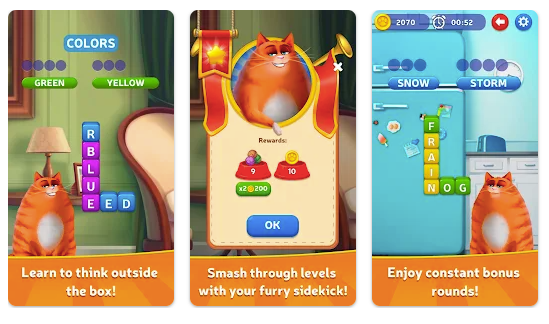
Kitty Scramble
Kitty Scramble is a word search puzzle that quietly trains attention, spelling accuracy, and visual scanning speed. The goal is simple: Find real words hidden in dense letter boards.
The challenge lies in filtering distractions quickly and spotting the right patterns before your eyes glaze over. That skill is critical to reading efficiency and language processing.
The game rewards careful observation over speed tapping, making it more cognitively engaging than many casual word apps. Hints help when you stall, but overusing them removes the mental workout.
Among free brain games, Kitty Scramble is best for players seeking relaxed language training with real cognitive engagement.
Key Features:
- It improves visual scanning and word recognition accuracy.
- Hidden word layouts train sustained attention.
- Gradual difficulty supports learning without frustration.
- Hint options prevent dead ends while preserving challenge.
- Short sessions make daily practice easy.
- Word variety strengthens spelling and vocabulary recall.
- Progress tracking encourages consistent play.
Mind Hippo
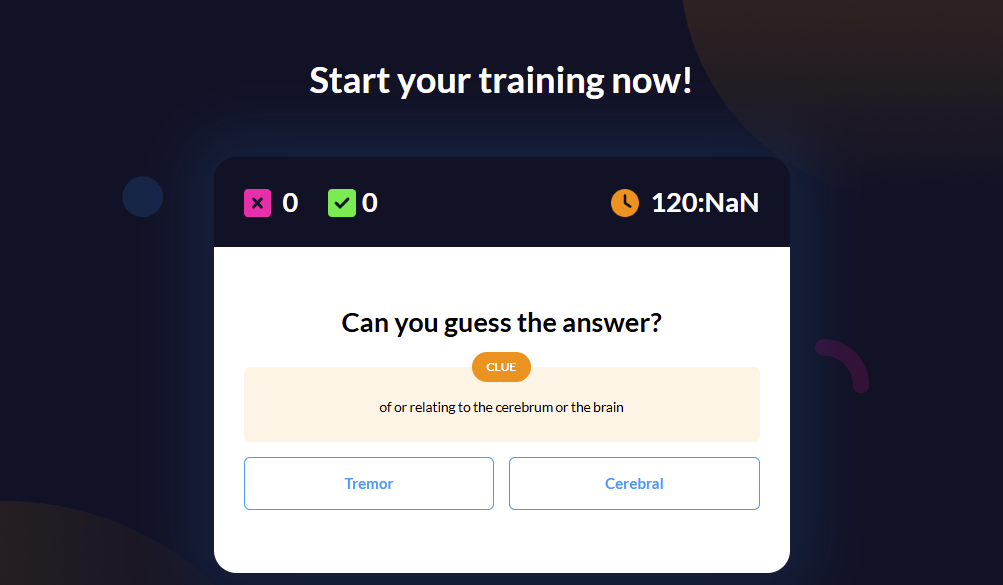
Mind Hippo is a web-based brain-training platform designed for people who want mental workouts without gimmicks or paywalls.
The games target memory, attention, logic, and problem-solving through short, focused exercises. That matters because cognitive training is most effective when sessions are frequent and manageable.
You open a browser and start playing. No downloads. No pressure. The exercises rely on repetition, pattern recognition, and gradual challenge rather than flashy rewards. Progress tracking adds awareness without turning performance into a scoreboard obsession.
Key Features:
- It trains memory, attention, and logical reasoning through short exercises.
- Web-based access removes the need for setup and device limitations.
- Progress tracking helps identify strengths and weak spots.
- Games emphasize thinking over speed tapping.
- Clean design reduces distraction and fatigue.
- Sessions fit easily into daily routines.
- No paywalls block core brain training activities.
Why Should You Install Free Brain Games?
- Zero Financial Commitment
Free brain games lower the barrier to entry, which matters more than most people realize. Cognitive training only works with consistency, and commitment is easier when money is not involved. They allow experimentation across different formats without pressure to justify a purchase.
- Easy to Access
Most free brain games are available instantly on browsers or mobile devices. There is no onboarding friction, no subscription setup, and minimal commitment. Accessibility matters because cognitive engagement often happens in short bursts.
Studies on habit formation suggest that ease of access increases repeat usage, which is essential for any form of mental training.
- Good for Beginners
Beginners benefit from low-stakes environments. Free brain games provide exposure without overwhelming users with metrics or long-term plans.
They help users identify strengths and weaknesses before committing further. Cognitive psychologists often recommend starting simple to build confidence and routine.
What are the Best Paid Brain Games in Today’s Market?
Paid brain games often blur the line between entertainment and cognitive challenge. When discussing these options, the strongest options are not traditional training apps. They are well-designed puzzle games that demand deep thinking.
- Baba Is You
- PolyBridge Construction
- Human Resource Machine
Baba Is You
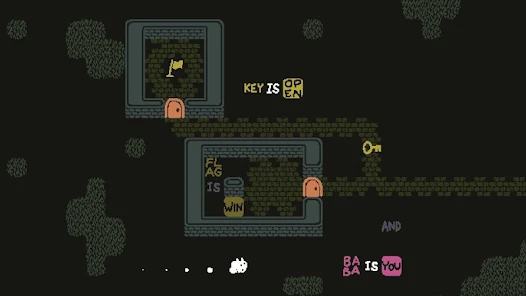
Baba Is You is not a puzzle game that tests memory or speed. It tests how well you think about thinking. Every level turns language into logic. Rules are physical objects you can move, break, or rewrite. That forces deep reasoning, mental flexibility, and problem decomposition.
You are not solving puzzles within rules. You are solving the regulations themselves. This directly develops abstract reasoning and cognitive flexibility, two skills strongly linked to higher-level problem-solving.
Progress may feel slow at first because the game requires precision, not guessing. When a solution clicks, it rewires how you approach problems outside the game.
Key Features:
- Language-based logic strengthens cognitive flexibility.
- Open-ended solutions encourage creative problem-solving.
- Difficulty comes from thinking, not time pressure.
- Each level teaches transferable reasoning skills.
- Minimal visuals keep focus on logic.
Pricing:
Baba Is You is a paid game. On Android, it typically costs $4.99 with no subscription. On PC platforms such as Steam, pricing usually ranges from $10.49 to $14.99, depending on sales. The Nintendo Switch version is priced similarly to the PC version.
All versions are a one-time purchase with full access to the game. There are no in-app purchases or recurring fees.
PolyBridge Construction
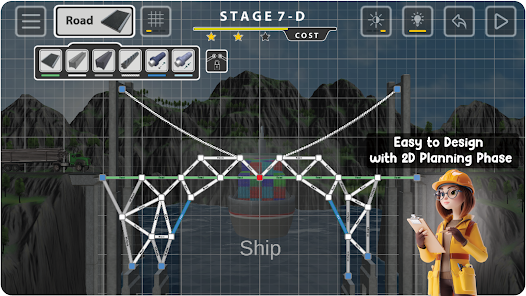
Poly Bridge is a physics puzzle game that develops structured thinking, planning, and iterative problem-solving. You design bridges in 2D, then watch them succeed or collapse in 3D. That feedback loop is the brain training hook.
Every failure teaches load distribution, constraint management, and cause-and-effect. You must balance materials, budget constraints, and physics principles to predict outcomes before testing. That directly strengthens logical reasoning and spatial planning.
Among paid brain games, Poly Bridge stands out for teaching engineering-style thinking without math formulas or lectures. It feels playful, but the cognitive demand is real. If you enjoy solving problems by building, breaking, and rebuilding smarter each time, this game delivers serious mental reps.
Key Features:
- It trains logical planning through trial-and-error design.
- Realistic physics reinforces cause-and-effect learning.
- Budget limits sharpen decision-making under constraints.
- Stress indicators provide clear performance feedback.
- 2D planning supports visualization skills.
- 3D testing improves spatial reasoning.
- Sandbox modes encourage creative experimentation.
Pricing:
On Android and iOS, pricing typically ranges from $4.99 to unlock complete content, depending on the version. On PC via Steam, prices usually range from $9.99 to $19.99, depending on the specific Poly Bridge release and sales. On Nintendo Switch, pricing is similar to PC. All versions are one-time purchases. There are no required subscriptions.
Human Resource Machine
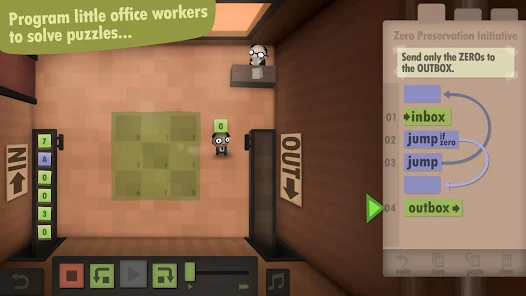
Human Resource Machine trains your logical thinking by forcing you to give clear instructions or risk everything breaking. You program a tiny office worker using simple visual commands to solve increasingly complex tasks.
No coding background is required, but real programming logic is unavoidable. You learn sequencing, loops, conditionals, and optimization through failure and iteration. Each level tightens constraints, which sharpens precision and planning.
The humor keeps frustration low, but the puzzles stay demanding. Mistakes are obvious, repeatable, and fixable, which is ideal for learning.
Key Features:
- It trains algorithmic and logical thinking through visual programming.
- Step-by-step instructions improve precision and clarity.
- Loops and conditions strengthen structured problem-solving.
- Optimization challenges push efficiency and foresight.
- Humor reduces cognitive fatigue during challenging puzzles.
- Difficulty increases without hiding rules.
- No prior coding experience is required.
Pricing:
Human Resource Machine is a one-time purchase, not a free-to-play game. On PC platforms such as Steam and Epic Games, it typically costs $14.99, but it often drops to about $4.94 during sales.
On mobile devices, including iOS and Android, pricing usually ranges from $3.99 to $5.99. On Nintendo Switch, the standard price is $14.99. Pricing varies by platform and sale periods.
Why Should You Install Paid Brain Games?
Paid brain games often justify their cost through depth rather than volume. They tend to focus on structured challenges rather than quick rewards.
- Personalized Training Program: Some paid platforms adapt content based on user performance, creating a more tailored progression.
- Adaptive Difficulty: Challenges adjust in real time, keeping tasks within the optimal difficulty zone shown to be best for learning.
- More Accurate Progress Tracking: Paid tools often provide more precise feedback and long-term tracking, which supports goal setting and reflection.
- Access to a Larger Library: A broader range of puzzles helps prevent stagnation and encourages sustained engagement.
Are Paid Brain Games Scientifically Better?
The short answer is no, not inherently. The long answer is more nuanced. Research consistently shows that both free and paid brain games can improve performance on trained tasks. There is limited evidence that paid games produce broader cognitive benefits simply because they cost money.
No substantial evidence that commercial brain training programs outperform simpler cognitive activities in terms of general intelligence gains. What matters more is task quality, engagement, and consistency.
Paid games can be better designed, but design quality is not determined solely by pricing. A free game can be just as cognitively demanding as a paid one.
How to Choose the Right Brain Game for You
The right choice depends on what you want to improve, how you stay motivated, and how realistically the game fits into your daily life. A good match increases consistency, and it’s consistency that actually drives cognitive engagement.
- Identify Your Cognitive Goals
Start with clarity. Brain games are most effective when they target specific skills rather than vague ideas like “getting smarter.” Memory, attention, problem-solving, language, and reasoning are distinct cognitive domains. A game that trains one may do little for another.
For example, word-based games support vocabulary and verbal fluency, while logic puzzles emphasize reasoning and planning. If your goal is focus, fast-paced attention tasks help more than slow puzzles. Avoid apps that promise to train every mental skill at once.
- Assess Your Learning Style & Motivation
Your personality matters more than most app features. Some people enjoy structured programs with levels, schedules, and performance metrics. Others prefer casual play without pressure. Neither approach is better, but mismatching style and structure leads to burnout.
- Watch Out for Overhyped Claims
Be cautious with marketing language. Claims that boost IQ, prevent dementia, or permanently rewire the brain are not supported by substantial evidence. While cognitive training can improve performance on practiced tasks, broad life-changing effects are rarely demonstrated in independent studies.
Wrapping Up: Free vs Paid Brain Games
Choosing between free and paid brain games is less about money and more about intention.
Free games offer accessibility and flexibility. They are excellent for beginners, casual players, and anyone testing the waters. Meanwhile, paid games are the best options when depth, structure, and long-form engagement matter.
If you want to keep learning about how brain games work, how to train specific cognitive skills, or how to build a sustainable brain training habit, explore more articles on the MindHippo blog.