
Your brain is not a dusty storage closet that fills up and stays the same forever. It is more like a gym. If you use it regularly, it adapts, strengthens, and gets quicker on its feet.
If you ignore it, reaction time slows, focus drifts, and memory becomes unreliable at the worst possible moments. The good news is that you do not need fancy equipment or a paid subscription to give your brain a solid daily workout.
In this guide, you will learn how free brain training tools can help sharpen memory, focus, and mental speed, plus which ones are actually worth your time. Expect practical advice, honest pros and cons, and tools you can start using today without spending a cent.
What are the Best Free Brain Training Tools You Can Use Daily?
Brain training works best when it is simple, consistent, and enjoyable enough that you actually come back tomorrow. The tools below meet those standards. Each option offers real mental challenges, clear feedback, and easy daily access.
These free brain training tools cover different cognitive skills, so you can mix and match depending on your goals, whether that is sharper memory, faster thinking, or better focus.
- Mind Hippo
- BrainBashers
- Duolingo
- Khan Academy
- Human Benchmark
1. MindHippo
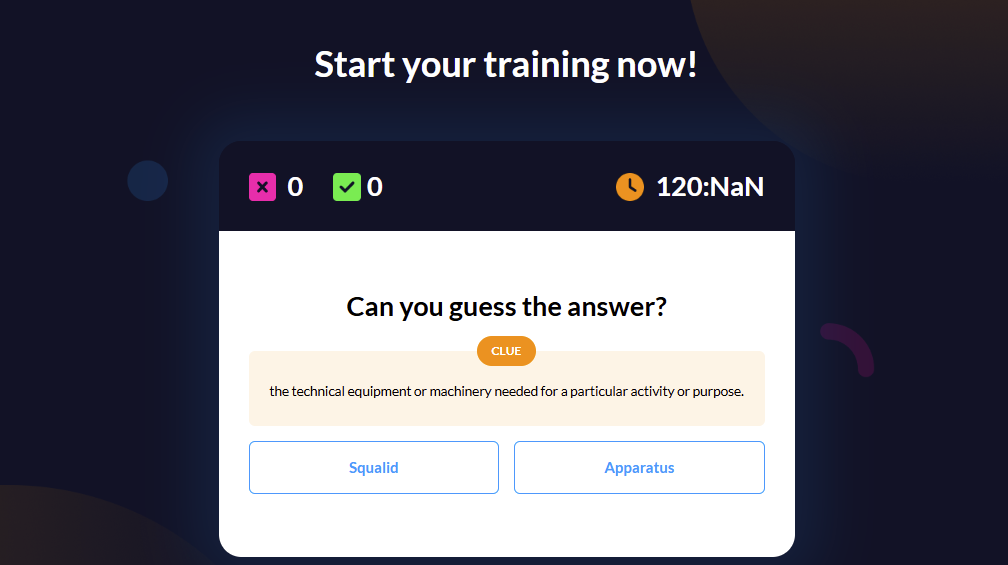
The platform offers browser-based games that target memory, attention, logic, and processing speed. You do not need to download an app or create a complicated profile to get started. That lowers friction, which matters more than people realize when building a daily habit.
What stands out is the balance between challenge and accessibility. Games start simple but quickly ask more of you, pushing working memory and decision-making without feeling overwhelming.
Sessions are short, which fits nicely into real life. Five to ten minutes is enough to get value, primarily when used daily.
Key Features
- The games train memory, attention, and logical reasoning in short sessions.
- The platform works instantly on any device with a browser.
- The difficulty adapts as your performance improves.
- The design remains simple, keeping the focus on thinking rather than menus.
- Daily play supports habit building without pressure.
- Progress tracking helps you notice real improvement over time.
- The games reward accuracy and speed without placing undue stress on the user.
2. BrainBashers
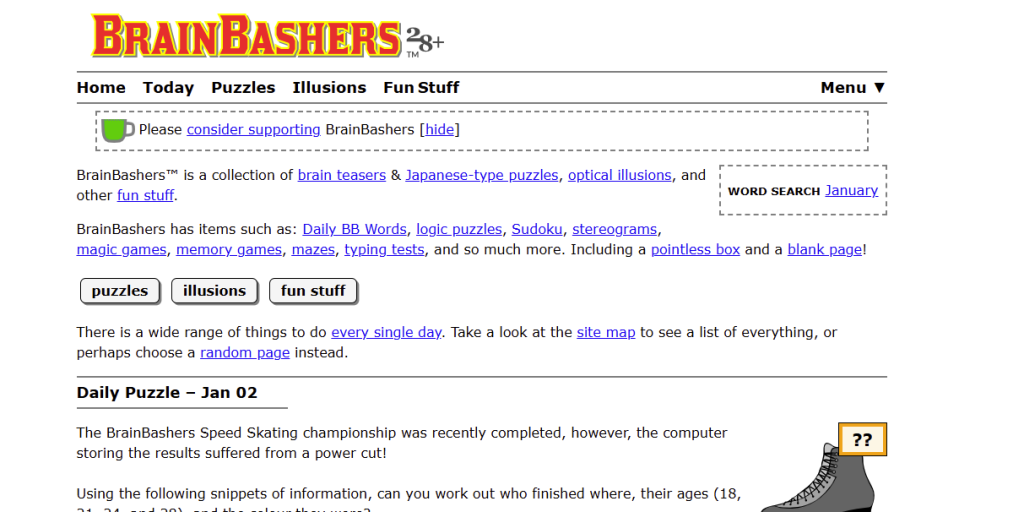
BrainBashers is an online platform founded in 1998, meaning it existed before most brain apps began tracking streaks. The site offers thousands of logic puzzles, riddles, math challenges, visual illusions, and Japanese-style puzzles that demand real thinking.
This matters because cognitive improvement comes from effort, not flashy animations. You pick a puzzle, and your brain does the rest. There is no onboarding, no dopamine tricks, and no artificial rewards.
If you want pure mental resistance training that actually makes you think, this earns its place as the best free brain training tool for puzzle lovers who value substance over polish.
Key Features:
- The puzzles train logic, reasoning, and problem-solving through real mental effort.
- The site offers thousands of challenges, updated daily.
- Difficulty ranges from beginner-friendly to genuinely hard.
- Japanese logic puzzles support deep concentration and pattern recognition.
- Visual illusions and riddles sharpen perception and attention.
- No accounts are required to start playing.
- The experience focuses on thinking, not on gamification.
3. Duolingo
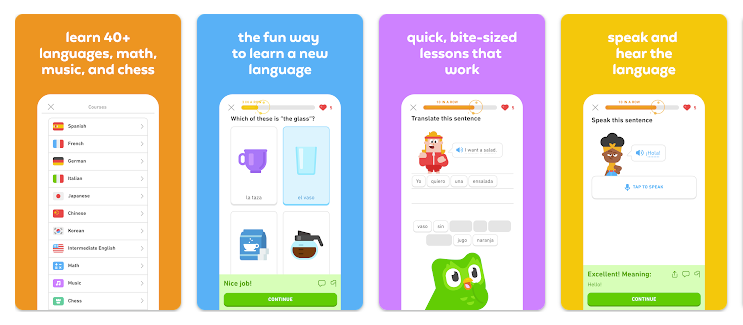
Duolingo looks like a cute language app, but it is secretly a brain workout in disguise.
Learning a new language forces your brain to juggle memory, attention, auditory processing, and pattern recognition. That combination builds cognitive flexibility, which research links to stronger executive function and better problem-solving.
It turns this effort into short lessons that are easy to stick with. The repetition system strengthens long-term memory through spaced practice, a proven learning method supported by decades of cognitive science research.
The app provides immediate feedback, fast corrections, and quick rewards, making daily training feel manageable.
Key Features:
- The lessons strengthen working memory and pattern recognition through daily repetition.
- The exercises improve attention and mental flexibility by switching between language tasks.
- The app uses spaced repetition to reinforce long-term memory.
- The lessons are delivered in short sessions that fit busy schedules.
- The platform builds consistency through progress tracking and quick feedback.
- The listening and speaking tasks support auditory processing skills.
- The app adapts to your skill level as you learn.
4. Khan Academy
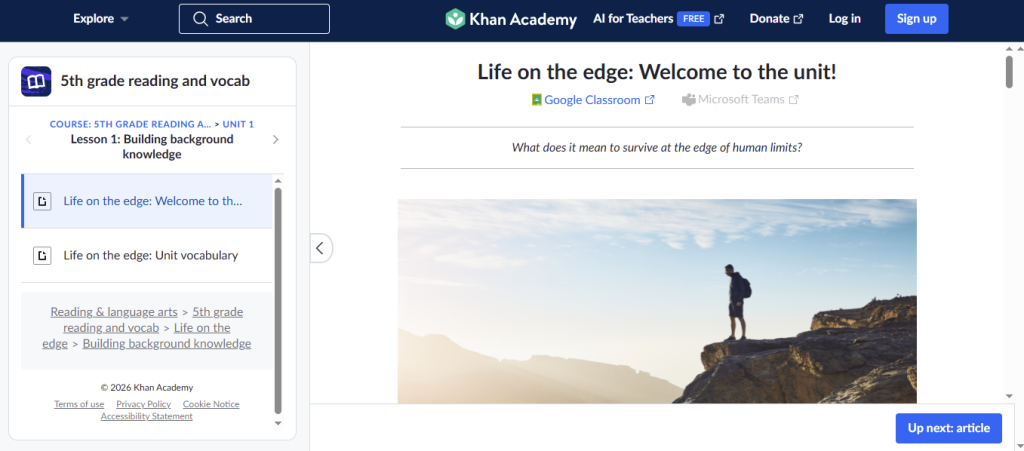
Khan Academy is not marketed as brain training, but it quietly does the job better than many games that are. Every lesson forces active thinking. You solve problems, test hypotheses, and correct mistakes in real time.
That process trains working memory, attention control, and reasoning, which are core executive functions tied to long-term cognitive health. Math, logic, and science lessons demand sustained focus, not passive clicking.
The mastery system requires you to understand the material before moving on, which strengthens mental endurance and problem-solving skills.
Key Features
- The lessons train reasoning and problem-solving through active practice.
- The mastery system strengthens memory by requiring understanding rather than guessing.
- Math and logic exercises improve attention and mental endurance.
- The platform adapts difficulty based on performance.
- Immediate feedback helps correct thinking errors fast.
- Short videos support comprehension without cognitive overload.
- Progress tracking keeps learning structured and measurable.
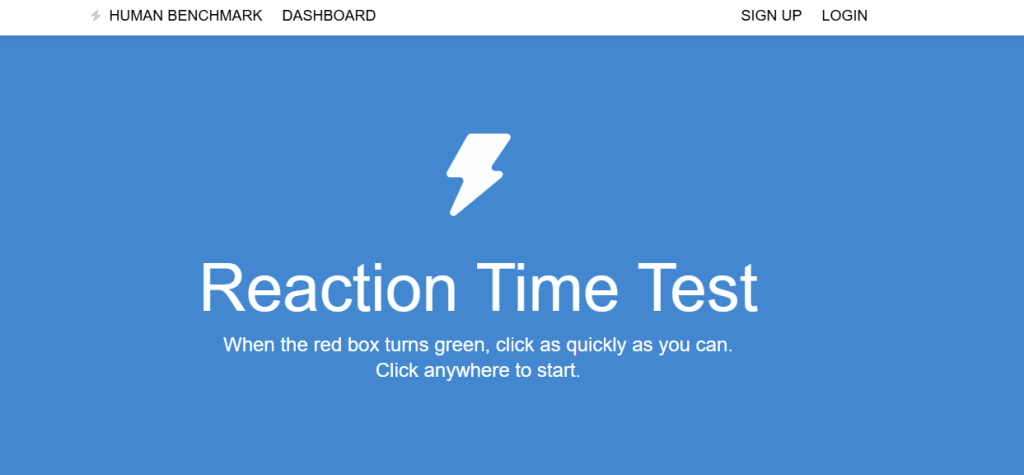
5. Human Benchmark
The platform measures core cognitive skills through simple tests that assess how quickly you respond, how much you remember, and how well you sustain focus. These tests assess working memory, attention, and processing speed, key components of executive function.
The site gives you raw data, not applause. That bluntness is helpful because it shows real progress rather than sugarcoating performance. Reaction Time, Number Memory, and Visual Memory tests create consistent cognitive strain, which research shows is necessary for strengthening neural pathways.
If you want measurable growth rather than flashy animations, this may be the best free brain-training tool for data-driven users seeking honest feedback and steady improvement.
Key Features
- The tests train working memory, attention, and processing speed through direct challenges.
- The platform gives clear performance scores that reveal actual cognitive change.
- The exercises are short, which supports consistent daily training.
- Global percentile rankings help users understand where they stand.
- The tests require focus without distractions.
- No onboarding required; start immediately.
- The site encourages measurable improvement rather than streak chasing.
What Makes a Brain Training Tool Effective?
Now that you have seen the top tools, you may be wondering why some apps perform better than others. Not all games are designed with cognitive science in mind.
The effectiveness of a training tool depends on how well it challenges the brain, how easy it is to use consistently, and how closely its exercises match real cognitive processes.
Cognitive Science Behind Brain Training
Brain training works because of neuroplasticity, the brain’s ability to reorganize itself based on experience. When you repeatedly challenge a cognitive skill, the neural networks supporting that skill become more efficient.
Effective free brain training tools usually include:
- Repetition with variation, which strengthens neural pathways while avoiding rote memorization
- Gradual challenge increases, which signal the brain to adapt
- Feedback, which helps adjust strategies and reinforce learning
Brain training is not magic. It does not instantly raise IQ. However, consistent practice can improve specific skills like attention, memory, and processing speed, especially when tasks are well-designed and used regularly.
Key Features to Look For
Good tools share practical design elements that support learning and habit formation.
- Variety of exercises
Variety prevents cognitive stagnation. When you repeat the same task endlessly, improvement becomes narrow and task-specific. Varied practice promotes broader skill transfer.
Brain training tools that rotate among memory, attention, and reasoning tasks keep multiple neural systems engaged, supporting more balanced cognitive development.
- Difficulty progression
Progressive difficulty matters because the brain adapts only when challenged. Tasks that are too easy stop producing change. Tasks that are too hard cause frustration.
Many studies show that desirable difficulty improves long-term retention. The tools you chose must adjust challenge levels gradually so the brain stays slightly uncomfortable but capable.
- Evidence-based games
Games grounded in cognitive psychology tend to produce better outcomes. For example, working memory tasks based on n-back or span tests have been widely studied.
While no game guarantees universal benefits, evidence-based designs align better with known mechanisms of learning and attention. Look for tools that reference cognitive skills rather than vague claims about intelligence.
- Engaging design
Engagement is not about flashy animations. It is about clarity, responsiveness, and a sense of progress. If a tool feels confusing or dull, users quit before the benefits appear. Clean design and quick feedback help maintain focus and motivation.
Who Benefits From Brain Training?
Brain training is not limited to one age group or profession. Research shows benefits across the lifespan when activities are matched to ability level.
Groups that benefit include:
- Students who are improving focus, working memory, and problem-solving
- Professionals who are managing cognitive load and attention demands
- Older adults who are maintaining processing speed and mental flexibility
Cognitively engaging activities help preserve mental function in later life. For younger users, training supports academic performance and self-regulation. The key is to select tools that align with goals and use them consistently without overtraining.
FAQs
1. Do free brain training tools actually work?
Yes, they can work when used consistently and with intention. These tools help strengthen specific skills such as memory, attention, reaction time, and problem-solving rather than boosting intelligence overnight.
The real benefit comes from regular use and from choosing tools that actively challenge your thinking rather than passive tapping.
2. What is the best free brain training app?
There is no single best option because people train their brains for different reasons. Platforms like Mind Hippo are well-suited for short, daily logic and focus exercises. At the same tiime, while Duolingo supports memory and mental flexibility through language learning. The best app is the one that fits your routine and keeps you coming back every day.
3. How many minutes a day should I do brain training?
Five to fifteen minutes per day is enough for most people to see progress. Short sessions help you stay focused and avoid mental burnout. Stopping while your brain still feels engaged makes it easier to build a daily habit.
4. Can brain games improve memory and focus?
Yes, many brain games are designed to strengthen working memory and attention control. Improvement is more noticeable when tasks gradually increase in difficulty and vary in type. Using different games helps skills carry over into daily activities such as studying, reading, and staying focused at work.
5. Are brain training apps good for seniors?
Yes, as long as the games are clear, paced well, and not frustrating. Many older adults benefit from exercises that support attention, processing speed, and memory recall. Simple designs and short sessions make it easier to stay consistent and engaged.
6. What is the best brain training tool for students?
Tools that build working memory and reasoning work best. Khan Academy supports problem-solving, while Mind Hippo offers quick cognitive drills. Combining both can be effective.
7. How long until I notice results?
Small changes often appear within a few weeks, such as faster recall or improved focus. Cognitive improvement builds gradually and depends on consistency rather than intensity. The longer you stick with daily practice, the more noticeable the benefits become.
8. Can I do brain training every day?
Yes, daily brain training is ideal when sessions stay short and enjoyable. Regular exposure helps reinforce mental skills without overwhelming your brain. If it starts to feel like a chore, switching games or taking a short break helps maintain motivation.
Wrapping Up
Your brain is wired for growth, and the more you challenge it with meaningful activities, the stronger it becomes.
The key advantage of free brain-training tools is their convenience. You do not need special equipment, complicated lessons, or long hours of commitment. With just a few minutes a day, you can sharpen your focus, strengthen your memory, and build greater mental flexibility.
If you are ready to start strengthening your cognitive abilities today, begin with one tool that feels natural and enjoyable. Play a few minutes each day, monitor your progress, and adjust as you go. Your brain will respond to the effort, and you will appreciate the improvements that come with consistent training.
For more articles on cognitive health, memory improvement, and daily brain workouts, continue exploring the blog at MindHippo.com.