
Can’t sit still long enough to finish a paragraph? You’re not alone. Most of us are caught in an endless loop of scrolling, notifications, and mental multitasking. Attention spans have shortened, and even remembering why we opened our phones can feel like a challenge.
The good news is that the same device that distracts us can also help train our focus. That’s where brain training apps come in. These programs use short, interactive tasks to strengthen cognitive skills such as attention, memory, and problem-solving.
In this guide, we’ll explore the best brain exercise apps that can help you refocus, think sharply, and stay mentally agile.
What are the Best Brain Exercise Apps for Short Attention Spans?
Brain exercise apps are designed to improve different aspects of cognition through structured, game-like challenges. They target neural circuits involved in attention, processing speed, and working memory.
For those who get easily distracted, the key is to find apps that deliver quick, engaging sessions without lengthy tutorials or complex steps.
The following list highlights some of the best brain exercise apps for short attention spans. These apps combine neuroscience, gamification, and mindfulness to make focus training sustainable and straightforward.
- Forest
- Mensa Brain Training
- NeuroNation
- Smarter Brain Training Game
- Mind Hippo
Forest
Forest is one of the best brain exercise apps for people who struggle to stay off their phones. It uses a simple but clever idea: every time you focus, you plant a virtual tree. If you leave the app to scroll, the tree dies.
It’s part productivity tool, part psychology experiment, and it works because it gives you visible proof of your focus. Over time, you grow a digital forest that represents real mental discipline.
The app gamifies attention control by turning restraint into a reward. It’s fun, calming, and mildly addictive in a good way.
Whether you’re working, studying, or trying to cut back on screen time, Forest helps you build better habits by showing you your progress in a way that makes you feel purposeful and alive.

Key Features
- Every focused session grows a tree that symbolizes time well spent.
- Leaving the app early kills the tree, reinforcing self-control through instant feedback.
- Timer and stopwatch modes let you easily track work sessions and habits.
- Custom reminders and motivational quotes keep you accountable without pressure.
- Sync progress across devices and use the Chrome extension to focus on the desktop.
- Join “Plant Together” mode to grow trees with friends or colleagues.
- Earn coins to unlock new tree species, creating visual motivation.
- Premium users can fund real trees through environmental partnerships.
- Detailed statistics track focus time and trends in improvement.
- Works offline, ensuring reliability even without Wi-Fi connectivity.
Pricing
Forest is a one-time purchase app, not a subscription. It typically costs $3.99-$4.99 USD. Once you buy it, you get full access to the focus timer, tree collection, and core productivity tools.
Mensa Brain Training
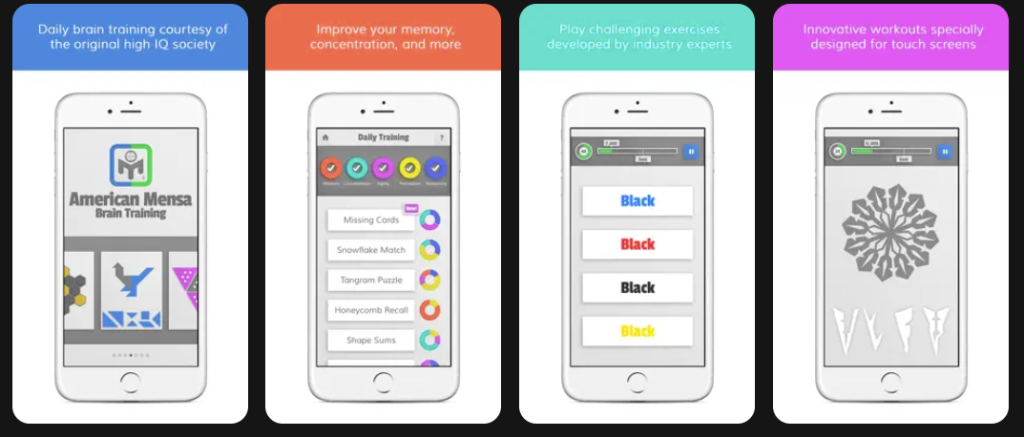
This program is built with help from the high-IQ society, Mensa. It’s designed for anyone who wants to sharpen focus, improve working memory, and strengthen problem-solving ability.
Unlike generic puzzle apps, this one uses structured exercises backed by research on fluid intelligence. Each task is short but mentally challenging, ideal for users with busy schedules or short attention spans.
Over time, it tracks your progress using the Mensa Brain Index, letting you see measurable improvement.
Among the best brain exercise apps, Mensa Brain Training stands out for its science-based credibility and a wide range of cognitive activities.
Key Features
- Daily sessions target five key cognitive skills: memory, concentration, agility, perception, and reasoning.
- Adaptive difficulty keeps each challenge matched to your skill level.
- The Mensa Brain Index shows how you perform across different disciplines.
- Exercises are quick, making it practical for short attention spans.
- The interface is clean and distraction-free, keeping the focus on thinking rather than tapping.
- Tasks are designed by cognitive experts, not just app developers.
- Progress tracking helps users stay consistent and goal-driven.
- Training feels rewarding rather than repetitive thanks to well-designed variation.
Pricing
Mensa Brain Training is free to download on iOS and Android. Most users start with a yearly subscription of around $9.99 USD, which unlocks full access to personalized training, the Mensa Brain Index, and advanced tracking features.
The app also offers quarterly and two-year plans that vary by region, usually within the same price range.
There are occasional in-app purchases for extra features or extended reports. Still, the base subscription covers everything you need for practical cognitive training.
NeuroNation
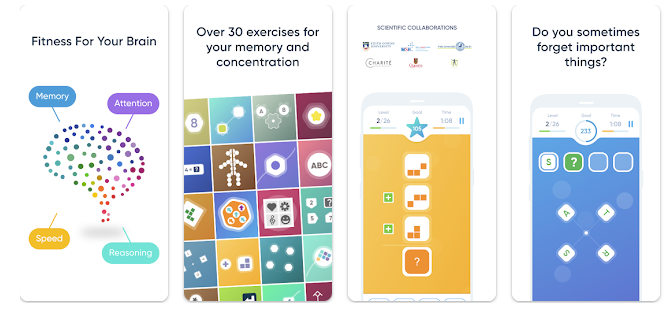
NeuroNation is one of the best brain exercise apps for anyone serious about improving focus, memory, and attention span. Built on real cognitive research, it offers short, structured exercises that train working memory and processing speed in just 15 minutes a day.
NeuroNation uses scientifically tested methods, including findings from a partnership with the Free University of Berlin. The result is measurable improvement in cognitive efficiency and sustained focus.
Key Features
- Personalized training plans based on your strengths and goals.
- Over 30 scientifically designed exercises covering memory, logic, and concentration.
- Adaptive difficulty keeps workouts challenging and progressive.
- Tracks cognitive progress through detailed analytics and benchmarks.
- Backed by peer-reviewed research on attention and working memory.
- Community of over 23 million global users for motivation and accountability.
- Integrates social competition features to enhance engagement in brain training.
- Includes reminders to help users maintain consistent daily training.
- Available on mobile and web for flexible use anywhere.
- Certified as a medical-grade brain training tool in parts of Europe.
Pricing
NeuroNation is free to download and offers a limited version with access to a few basic exercises. The premium version unlocks the full library of 34+ exercises, advanced analytics, and custom training plans.
Subscription options usually range from $7 to $14 USD per month, depending on the plan and region. Longer-term plans, such as six-month or yearly subscriptions, offer lower monthly rates.
Smarter Brain Training Game
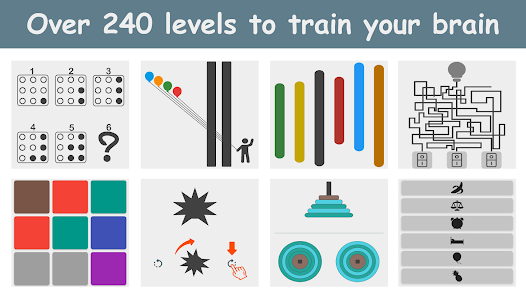
Smarter includes fast-paced mini-challenges that test focus, logic, memory, and reflexes. It’s built for people who want sharper attention without long, boring drills. Each game lasts a few minutes and targets specific cognitive skills, including attention to detail, numerical reasoning, and reaction time.
It blends science-based exercises with a game-like design, so training feels rewarding rather than routine. It adapts as you play, ensuring the difficulty grows with you.
Key Features
- Games adjust difficulty automatically to match your cognitive progress.
- Includes daily training sets that mix short games for balanced mental workouts.
- Real-time multiplayer mode lets you compete with friends or players worldwide.
- Color-blind mode ensures accessibility for all visual types.
- Progress tracking displays improvement graphs across skill categories.
- Reflex and multitasking games enhance both brain speed and hand-eye coordination.
- Offers reminders to help maintain a consistent training routine.
Pricing
Smarter Brain Training Game is free to download on Google Play, but access is limited to a small selection of games. The premium version unlocks all categories, removes ads, and adds detailed progress reports.
Mind Hippo
Mind Hippo is a 100% free, web-based platform that offers short, focused brain-training games to improve memory, concentration, and problem-solving. It runs entirely in your browser, no download or subscription needed.
The platform features interactive challenges grounded in proven cognitive science, with no ads, upsells, or gimmicks. Every exercise is designed to build neural pathways through repetition and adaptation.
It’s fast, accessible, and ideal for anyone looking to sharpen their mind without getting stuck in a paywall.

Key Features
- Free interactive memory games help improve recall and speed.
- No ads, no subscriptions, no distractions
- Blog content provides study tips, brain health strategies, and memory techniques.
- Completely web-based, accessible across devices with no installation needed.
- New users can play instantly without creating an account.
- Ideal for students, older adults, and busy professionals needing quick mental resets
Pricing
Mind Hippo is entirely free to use. There is no paid version: no monthly fees, no in-app purchases, and no upselling. Every game, feature, and article on the site is available to all users at no cost. You can train your brain daily, track your progress, and explore their educational content without ever entering payment details.
Pros & Cons of Using Brain Exercise Apps To Improve Short Attention Spans
Brain training apps are convenient tools for anyone looking to improve focus and mental endurance, but, like any method, they have strengths and limitations. The key is to use them wisely and understand what they can realistically achieve.
Pros:
- Accessible and flexible: You can train anywhere, on the train, during breaks, or before bed. Short sessions fit easily into busy schedules.
- Backed by research: Many apps, such as Lumosity and NeuroNation, draw on validated cognitive science studies that demonstrate benefits for working memory and attentional control.
- Measurable progress: Built-in analytics let you track improvements in speed, accuracy, and consistency, motivating you to stay consistent.
- Engaging and rewarding: Gamification turns training into play, helping users stick with routines that might otherwise feel tedious.
- Holistic benefits: Some apps combine mindfulness, emotional awareness, and focus drills to address the mental factors that often undermine attention.
Cons:
- Limited real-world transfer: Many brain-training results show “near transfer,” meaning improvement on similar tasks. Meanwhile, results show limited improvements or “far transfer” to daily life situations.
- Overreliance on digital tools: If users rely solely on apps, they may neglect real-life habits such as sleep, diet, and exercise, all of which are equally vital to cognitive performance.
- Subscription fatigue: Some high-quality apps hide key features behind paywalls, discouraging consistent use.
- Variable scientific rigor: Not all apps claiming “neuroscience-backed” training have solid evidence. Users should check for peer-reviewed studies or credible affiliations.
- Potential screen fatigue: Excessive time on digital devices, even for training, can increase eye strain and reduce motivation if not balanced with offline activities.
Overall, brain exercise apps are helpful cognitive companions. Still, they work best when paired with healthy daily routines, such as adequate rest, movement, and intentional tech breaks. They’re not magic pills for attention problems, but consistent practice can yield tangible improvements in mental stamina.
Who Should Use Brain Exercise Apps?
Anyone can benefit from cognitive training, but certain groups gain particular advantages. These apps serve as digital gym sessions for the mind, ideal for those who face constant distractions or mental fatigue.
Suitable Users Include:
- Students who are juggling multiple subjects or online learning. Quick sessions enhance concentration and information retention.
- Professionals managing heavy workloads and endless notifications. Regular use can improve task switching and sustained focus.
- Older adults seeking to maintain cognitive agility. Research suggests that structured cognitive exercises may delay age-related decline.
- Individuals with attention challenges, such as ADHD-like symptoms. While these apps are not medical treatments, they can complement behavioral strategies for focus management.
- Anyone under chronic stress. Stress drains working memory and impairs attention. Apps that blend relaxation and cognitive drills can help restore balance.
Brain training apps are most effective for users who treat them as tools, not replacements for cognitive effort. The brain thrives on novelty, so alternating between mental games, reading, and real-world problem-solving produces more potent, more lasting effects.
Best Practices for Use:
- Start small: 5–10 minutes daily is enough to build momentum.
- Stay consistent: Neural change happens with repetition, not intensity.
- Avoid multitasking: Focus on one app or task at a time.
- Mix formats: Combine focus games with meditation or physical exercise for holistic results.
When used intentionally, brain-training apps can sharpen your focus in ways that spill over into study, work, and daily life.
FAQs
Do brain exercise apps actually improve attention?
Yes. Studies suggest they enhance specific cognitive skills, especially sustained attention and processing speed. However, results vary by user and task type. Regular use with mindful focus improves outcomes.
How long should sessions be for short attention spans?
Start with 3–5 minutes daily. Consistency matters more than duration. Gradually increase to 10–15 minutes as your tolerance for focus grows.
Are games better than mindfulness for focus?
Both have value. Games train active attention, while mindfulness strengthens awareness and reduces mind-wandering. Combining both yields the best results.
Can kids use these apps safely and effectively?
Yes, as long as the apps are age-appropriate and screen time is monitored. Parents should supervise use and ensure balance with physical play and offline learning.
What’s the fastest way to see benefits?
Consistency is key. Within two to three weeks of daily short sessions, many users notice improved alertness and focus endurance.
Are brain training apps really effective?
They’re effective for targeted improvements like memory, processing speed, and attention control. However, they complement, not replace, healthy routines, sleep, and physical activity.
Wrapping Up
Short attention spans are not a permanent flaw. They’re a modern condition shaped by endless stimulation and mental overload. The brain, however, is remarkably adaptable. With a bit of structure and consistency, it can be trained to sustain focus and filter distractions more efficiently.
If you’ve ever felt that your mind drifts faster than your screen refreshes, these tools can help anchor your focus back where it belongs. Start small, just a few minutes a day. Track your progress. Notice how your mind stays with tasks longer, even outside the app.
For more insights on building focus and mental clarity, explore our other articles on Mind Hippo
, where we share science-backed ways to train your brain and improve everyday thinking.